Two Countries, Two Universes of Style
If you have spent any time on Pinterest or Instagram in the last five years, you have seen them: the French girl with the half-tucked shirt and the just-right blazer, and the Korean girl with the oversized everything and the bag the size of a credit card. They both look like they woke up effortlessly chic, but they arrived there by completely different routes. French street style is about looking like you did not try, even when you absolutely did. Korean street style is about looking intentional down to the last sock, but in a way that feels playful rather than stiff. Both are formulas. And formulas can be stolen.
The French Formula: Subtract, Do Not Add
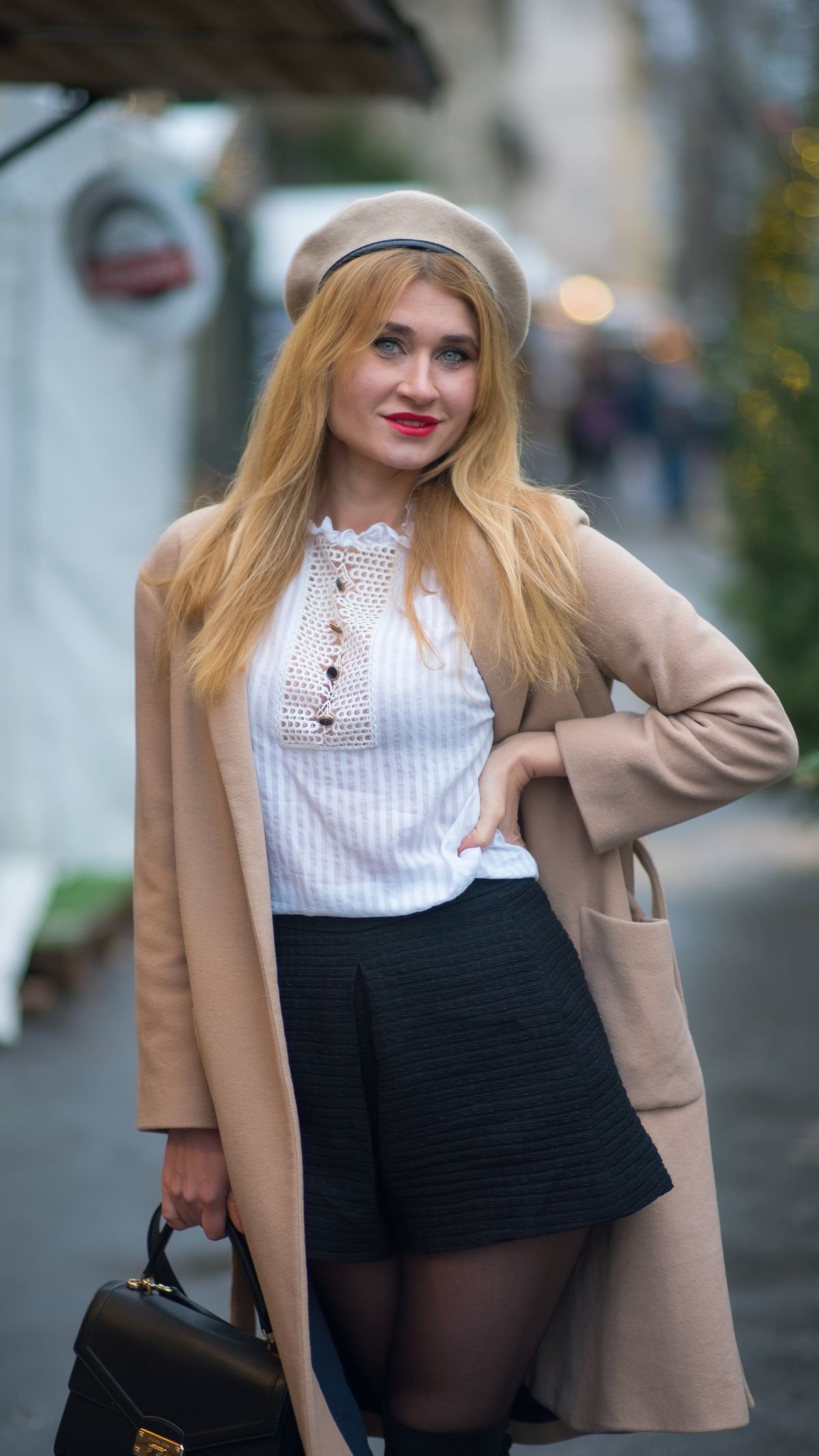
French street style has a rule that sounds too simple to work: before you leave the house, take one thing off. The French aesthetic is built on restraint. A blazer thrown over a white tee. Straight-leg jeans with a single cuff. A pair of loafers or ballet flats that have seen some pavement. The colors stay in a narrow lane: navy, cream, black, camel, and the occasional red lip or red sock for a controlled pop. The silhouette is fitted but never tight. The hair is air-dried, the makeup is "just brows and lips," and the bag is leather, unstructured, and worn-in. There is a French uniform, and it is this: a tailored blazer, a plain tee or silk camisole, high-waisted straight jeans, and a flat shoe. Swap the blazer for a trench when it rains. Swap the flats for a low block heel when the occasion calls for it. That is the whole system.
The Korean Formula: Build the Silhouette First
Korean street style starts from the opposite end. Where French style subtracts, Korean style sculpts. The first question is not "what pieces?" but "what shape?" Oversized blazer balanced by a mini skirt. Voluminous wide-leg pants anchored by a fitted crop top. An enormous sweater worn as a dress with chunky boots underneath. Proportions are the whole game. The colors are broader too: neutrals still anchor, but pastels, bright accents, and pattern-mixing are fair game. Accessories are maximalist in miniature: tiny shoulder bags, phone cases with personality, socks with a point of view. The Korean outfit formula is: pick one exaggerated proportion -- an oversized top or an oversized bottom, never both -- and keep everything else clean and fitted. Add one unexpected accessory. Done.

Three Formulas You Can Steal Right Now
Formula 1 (French): The blazer + the white tee + the straight jeans + ballet flats. Keep the blazer unbuttoned, the tee slightly tucked, and the colors neutral. Formula 2 (Korean): The oversized knit + the mini skirt + knee-high socks + loafers. The knit should be big enough to make the skirt almost disappear. The socks are doing the work of making it look intentional. Formula 3 (The Mix): Take the French palette (cream, navy, camel) and apply the Korean proportion play (oversized blazer, slim trouser, chunky sneaker). This is the sweet spot where both aesthetics overlap, and it is the easiest entry point if you do not want to commit fully to either.
What They Share (and Where They Split)
Both French and Korean street style care deeply about fit, fabric, and the way a garment drapes on the body. Neither aesthetic tolerates anything that looks cheap or poorly cut. Where they split: French style wants you to look like you dressed in five minutes. Korean style wants you to look like you dressed with a vision. Neither is wrong. The French approach is better for days when you want to feel quietly confident and unbothered. The Korean approach is better for days when you want your outfit to start a conversation. The power move is knowing which formula to deploy on which day.
Steal the System, Not the Shopping List
The point is not to dress exactly like a Parisian or exactly like someone in Seoul. The point is to understand the underlying systems: French style is a subtraction game. Korean style is a proportion game. Once you know that, you do not need a new wardrobe. You just need to look at your existing clothes through a different lens. Pull out your blazer and your best jeans. Try them with flats instead of sneakers. Then try them with an oversized sweater and a structured bag. Same pieces, entirely different energy. That is the difference between copying a look and understanding a formula. One fades. The other stays with you.